
· 21 September 2026 ·
James' Figs - Cuttings: What to expect
I thought I'd put together a little information about the cuttings I send out, how I prepare them, and what you can expect when ordering from James’ Figs. If you've bought fig cuttings before, you'll know that every tree grows a little differently, so cuttings can vary in appearance. What I can assure you is that I take care when selecting, cutting and preparing each order.
Introduction
There's something pretty satisfying about taking a small piece of wood and turning it into a healthy, productive fig tree. My aim is to provide good-quality cuttings that give you a solid starting point. From there, a bit of care, the right conditions and some patience can go a long way.
Dormant cuttings - cut fresh
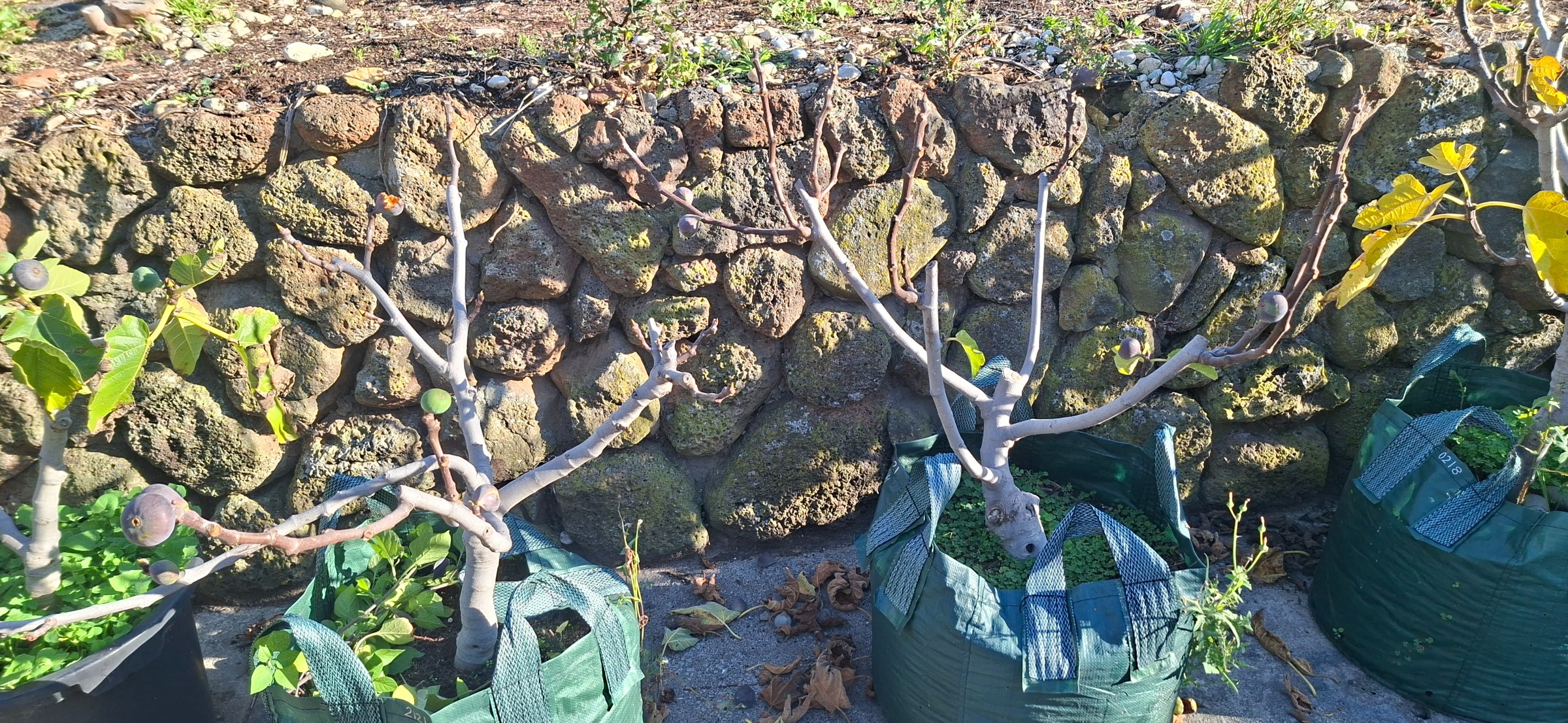
My cuttings are taken during winter dormancy, when the trees have dropped their leaves and are resting for the season. This is a great time to take fig cuttings, as the dormant wood contains stored reserves that help support the cutting as it begins the process of rooting and producing new growth. I cut your order fresh from the tree, no earlier than the day before it's sent. This means your cuttings aren't sitting around for weeks before making their way to you.
Good buds - good potential
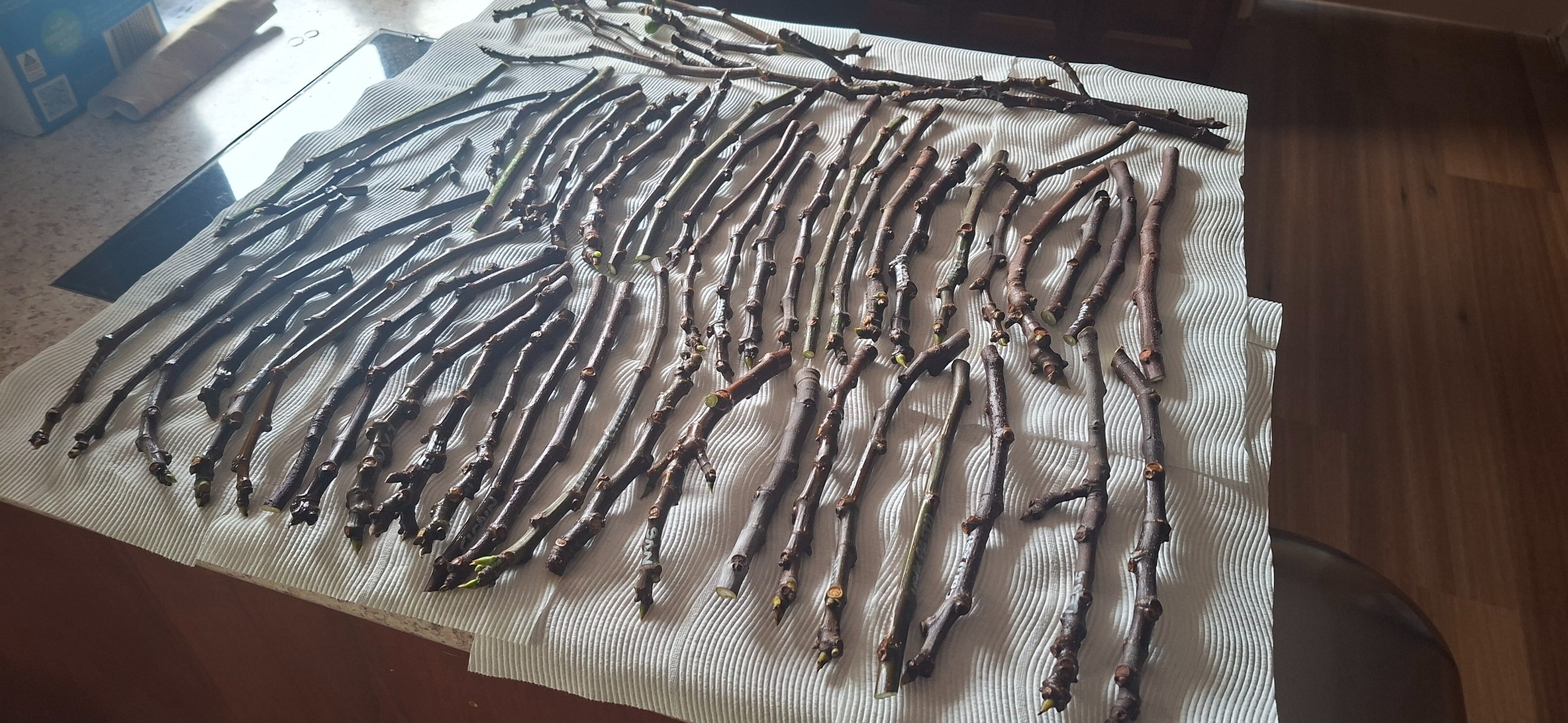
I aim to supply cuttings with a minimum of three buds, although most will have more, depending on the spacing between nodes. In terms of size, my cuttings will generally be at least 8 inches (20 cm) long, and usually longer. However, every tree is different, and the shape and availability of suitable wood can vary between varieties. If I'm not happy with the size of a particular cutting because the available wood on that tree hasn't allowed me to cut what I'd consider a suitable piece, I'll always include an extra cutting or two to make up for it. I'd rather put a little extra in the order than send something I'm not happy with. I always ensure that I only supply the quality of wood that I myself would be happy receiving.
Bigger is not always better
It's easy to assume that a longer or thicker cutting will root more easily, but that's not necessarily the case. While I can assure you that my cuttings are usually well above average length and never as thin as a toothpick, some growers believe that thicker longer is better. Well yes, longer might mean you can chop it in half and propagate two plants, but if you believe that sticking a super long cutting in a small pot is a good idea, you are very much mistaken. And if you are trying to root logs, you can expect them to take much longer to root and that added waiting time gives you more room for error. Therefore, I conclude, that success depends on a number of factors, including the variety, the condition of the wood, temperature, moisture and the propagation method. A thick cutting isn't automatically better than a thinner one, and a longer cutting doesn't guarantee better results either. What matters is starting with suitable, healthy wood and giving it the right conditions to root. I focus on selecting good cuttings to give you the best chance of success rather than simply making them as big as possible. There is a lot more to selecting a suitable cutting than size alone!
Clean Tools and Careful Preparation
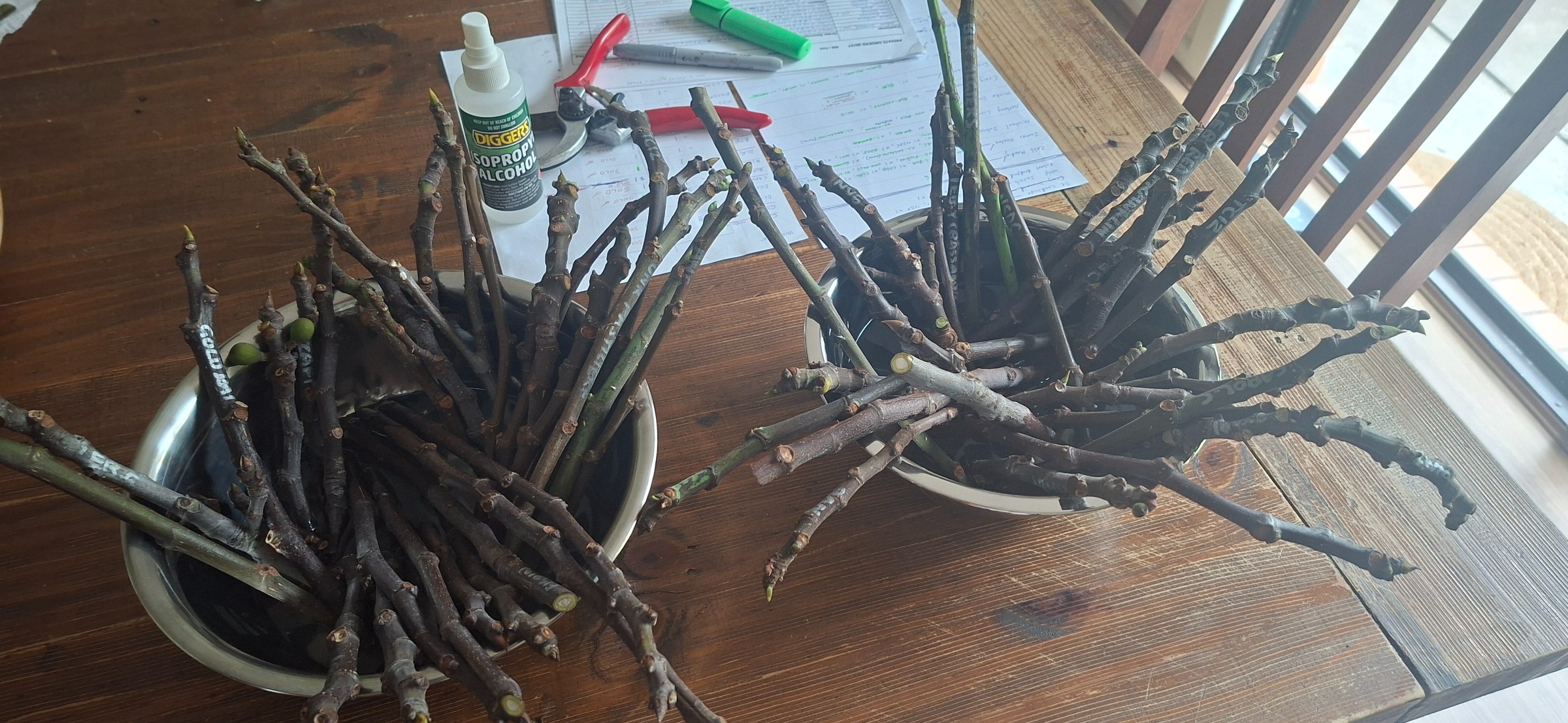
I take care when preparing orders to help minimise the risk of spreading disease between varieties. My pruning shears are sterilised with alcohol between each variety, rather than using the same uncleaned tools across the whole collection. It's a simple step, but an important one when working with different trees. Once cut, the cuttings are gently washed under the tap and left to air-dry before being packed. I then wrap each variety separately, using slightly damp paper towel around the base of the cuttings, before tightly wrapping them in plastic bags to help retain moisture during transit. I want each order to be properly prepared before it leaves here, rather than simply cutting a few branches and throwing them in a bag.
Clearly Labelled, from start to finish
I know how important it is to keep varieties correctly identified, especially when you're growing a few different figs. That's why I write the variety name directly onto each individual cutting with a metallic marker straight after pruning, making it easy to read. Once each variety has been wrapped and packed, I also label the outside of the packaging so you can easily identify what's what before even opening it. It's a simple extra step, but it helps keep everything organised and takes the guesswork out of unpacking your order.
Did you enjoy this article?
Keep reading
Browse all field notes