
Fig Wasp · 25 September 2026 · 2 min read
Male Capri figs and the fig wasp
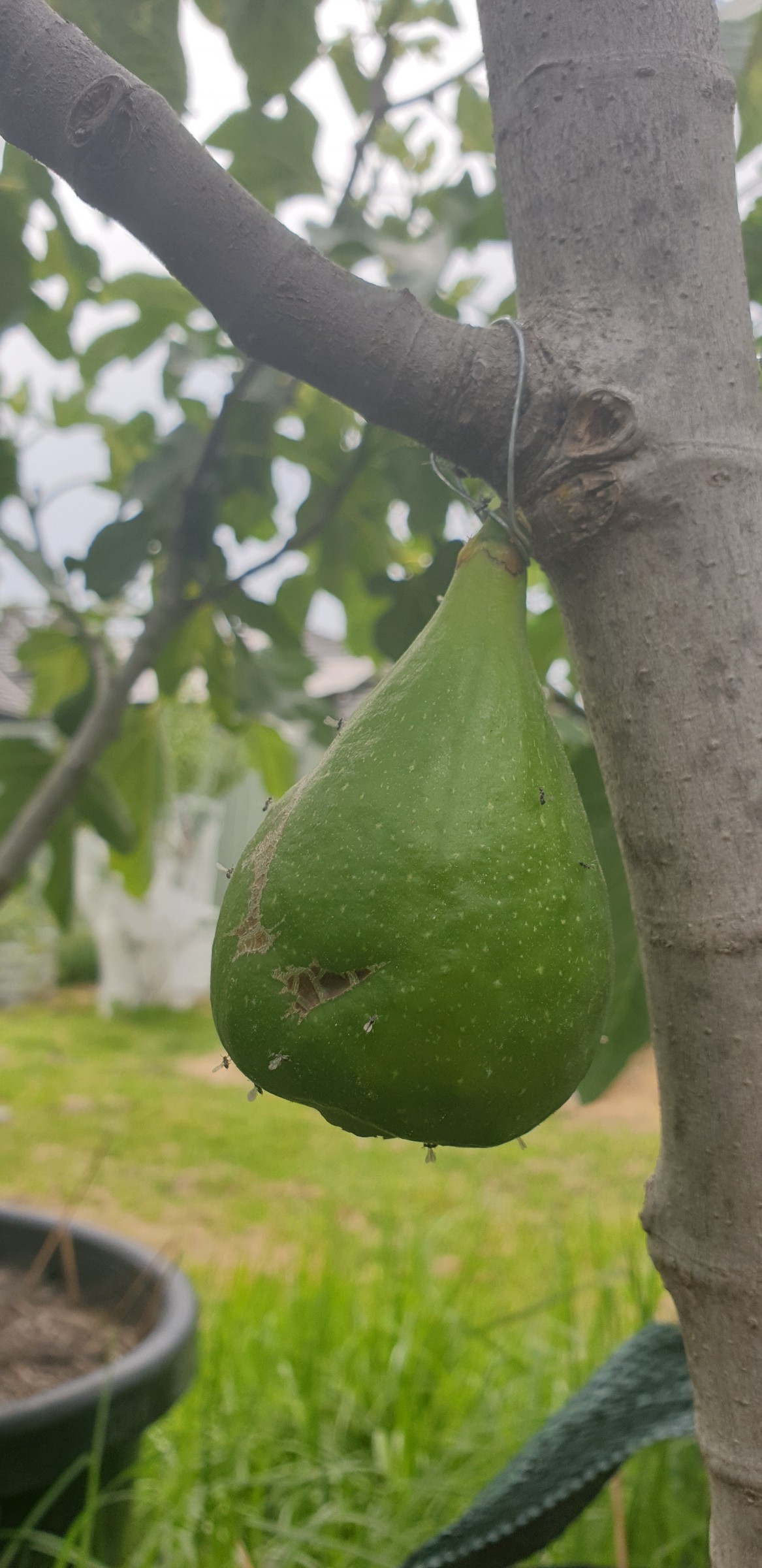
In this article we uncover the three crops typically produced by Male fig trees as well as the role that the fig wasp plays in this cycle.
The stages of a caprifig's crop (Special thanks to Fighunter Downunder who I originally learned this from):
- Most caprifigs have three crops, the wasps lay their eggs in one crop and then their babies will eventually hatch and exit the figs, entering into the next crop. - In an ideal situation, a caprifig tree can sustain this cycle for the full year and if so, can house a permanent wasp colony. This will require there to always be a crop forming when the new wasps exit the previous crop, sometimes a caprifig cannot achieve this, usually depending on variety of caprifig and/or age, conditions etc. - The best way to increase the chances of establishing a self sustaining wasp colony, is to grow more than one variety of caprifig, as just like female varieties, they can set figs early, mid or late season, and that larger window will ensure there is always a crop forming in time whenever the wasps exit the previous crop. Caprifig crops: 1. Profici - The current crop which you see pictured is called the "Profici" crop and begins to form in Spring. This is the equivalent of a female fig breba crop as it grows on last seasons wood. 2. Mammoni - The next crop to form is the "Mammoni" crop, which forms in summer on this seasons growth. This is the equivalent of the female main crop. 3. Mamme - After the Mammoni crop comes the Mamme crop, which is known as the winter crop. The mamme crop is usually small (not many figs) and is a crucial crop in allowing the wasp cycle to continue to the next season. Some varieties can produce a reliable and even large Mamme crop, these are highly desirable, others, might not produce mamme at all. Mamme crop figs are a good giveaway that a tree is male, as in the winter, they set on the dormant (leafless) tree.
Keep reading
Browse all field notes